
Entry Systems That Track and Control Access
Card Readers in Scottsdale and the Phoenix Metro area for facilities requiring secure, scalable management of who enters restricted areas
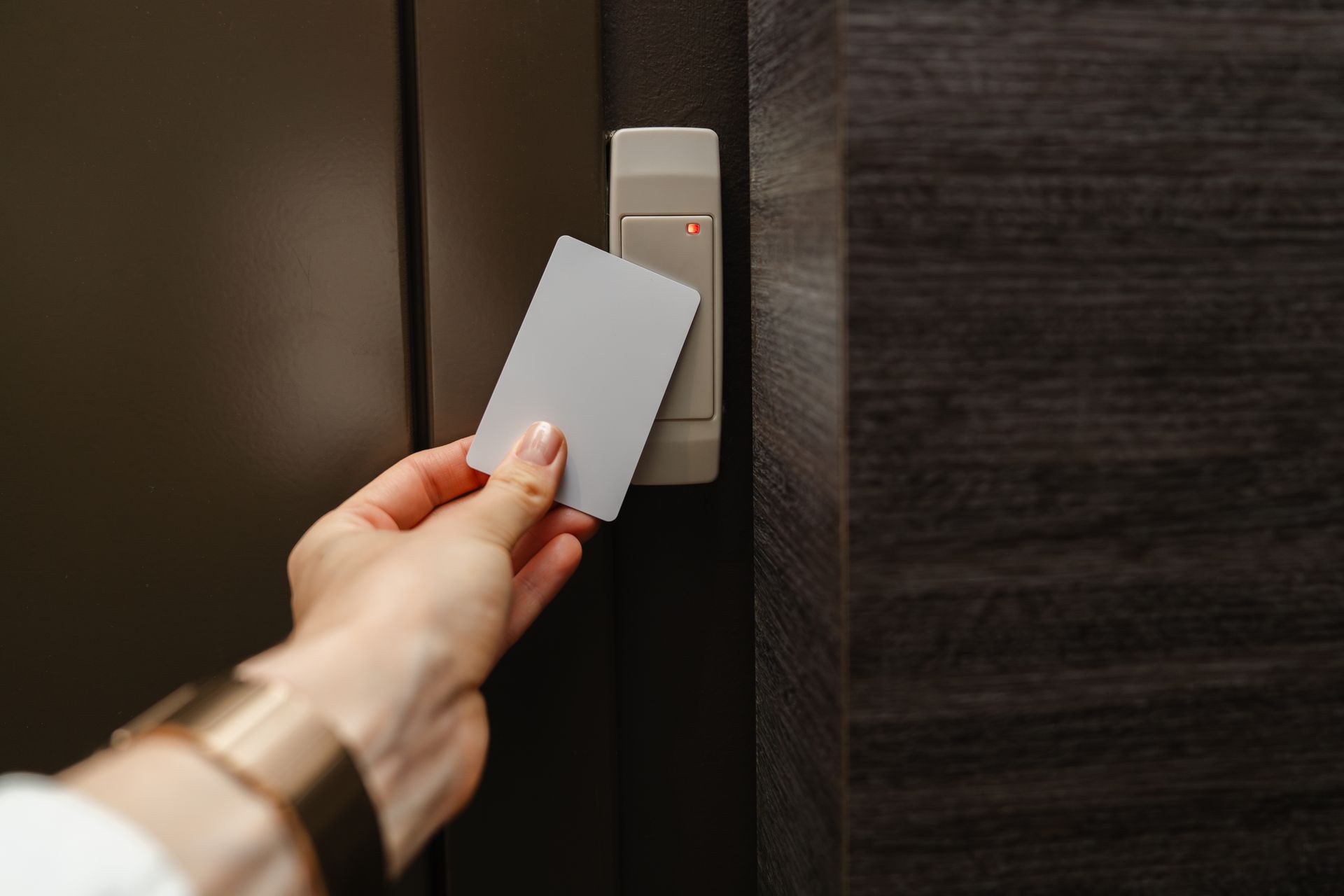
Offices, storage facilities, and commercial buildings often need to control access to specific rooms or zones while maintaining a record of who entered and when. Card-based entry systems replace traditional keys with credential cards that employees or authorized users present to a reader, which verifies permission and unlocks the door. Phase 1 Electronics installs these systems with centralized management software that lets you issue new credentials, revoke access instantly, and review entry logs without physically retrieving keys or changing locks.
The card reader connects to an electronic lock and a control panel that maintains a database of valid credentials. When someone presents a card, the reader checks whether that credential has permission to access the specific door at that time. If authorized, the lock releases; if not, the attempt is logged and the door remains secured. You define access levels for different users—some cards open all doors, while others work only during business hours or grant entry to designated areas.
Request a detailed estimate based on the number of entry points and users requiring access control.
Installation begins with assessing door hardware to confirm compatibility with electric strikes, magnetic locks, or motorized deadbolts. The reader mounts on the exterior or interior side of the door, depending on security requirements, and wiring runs from the reader to the control panel and power supply. You program the system to assign credentials, set access schedules, and define which doors each user can unlock. Phase 1 Electronics configures the software to generate reports showing entry times, failed access attempts, and doors left unsecured beyond normal hours.
After installation, issuing a new credential takes seconds through the management interface—you enter the user's name, assign permissions, and encode a card. If someone loses a card or leaves the organization, you deactivate that credential immediately without affecting other users or replacing hardware. The system scales as your facility grows; adding more doors or users requires only additional readers and credentials, not a redesigned access architecture.
The system also integrates with surveillance cameras and alarm panels, so that unauthorized access attempts trigger video recording or alert security personnel in real time. Some configurations support multi-factor authentication, requiring both a card and a PIN code for high-security areas. Battery backup keeps the system operational during power outages, and manual override options provide emergency access when needed.
What Property Owners Usually Ask
Facility managers and property owners typically want to understand credential management, system scalability, and how access events are logged and reported.
What happens when an employee loses their access card?
You deactivate the lost credential through the management software, preventing it from unlocking any door. A replacement card is issued and programmed with the same or updated permissions, and the process takes only a few minutes without disrupting access for other users.
How do you control access to different areas within the same building?
Each door is assigned to one or more access groups, and user credentials are linked to the groups they're authorized to enter. Someone with lobby access won't be able to unlock server rooms or executive offices unless their credential includes those permissions.
Can the system track who entered a specific room and when?
Yes, every valid card presentation is logged with the credential ID, door location, and timestamp. You generate reports filtering by user, door, or time range to audit access patterns or investigate security incidents.
What type of cards or credentials does the system use?
Most installations use proximity cards or key fobs that communicate via RFID or NFC when held near the reader. Some systems also support mobile credentials delivered through smartphone apps, eliminating the need for physical cards altogether.
How does the system handle after-hours access or temporary visitors?
You create time-based access rules that allow certain credentials to work only during specified hours or days. Temporary visitor cards can be issued with expiration dates, automatically becoming inactive once the access window closes.
Phase 1 Electronics configures card reader systems that integrate with your existing security infrastructure, providing centralized control over multiple entry points and users. Schedule an access control system setup consultation to review your facility's layout and credential management requirements.